

Ecumenism at Sophia
Beyond the Excommunications
by Michele Zanzucchi
A seminar organized on December 8th by the “Chiara Lubich-Athenagoras I Ecumenical Chair,” established at the Sophia University Institute in Loppiano (Florence), commemorated the sixtieth anniversary of an event of enormous significance in Catholic-Orthodox relations. Presentations were delivered by the two theologian co-directors of the chair: the Institute’s Rector, Professor Declan O’Byrne, and Metropolitan Maximos of Selyvria, a prominent figure in the Ecumenical Patriarchate of Constantinople.

1965-2025: The Lifting of the Excommunications, was the title of the seminar celebrating the 60th anniversary of the lifting of the mutual excommunications between the Church of Rome and the Ecumenical Patriarchate of Constantinople, which took place on 7 December 7 1965, with two simultaneous ceremonies in Istanbul and Rome on the date of the conclusion of Vatican II. The event reflected on the «memory of the undivided Church of the first millennium,» a “prophetic gesture” that opened a new path of reconciliation and dialogue between the sister Churches. Participants analyzed the relevance of the Nicene-Constantinopolitan Creed as the strongest ecumenical bond which, although shared, poses the paradox of persistent Eucharistic division. The importance of addressing complex doctrinal issues, such as primacy and synodality, within a restored communion, and not as barriers to its realization, was discussed. Official messages, including those of Pope Leo XIV and Patriarch Bartholomew I, called for the full implementation of the ecclesiastical and canonical effects of the 1965 Declaration, while also eliminating residual polemical terminology. The role of the dialogue of love and charity—embodied by the friendship between Athenagoras I and Chiara Lubich—which precedes and prepares theological progress was highlighted, with the perspective that unity is a gift from God to be discerned with theological clarity and ecclesial virtue.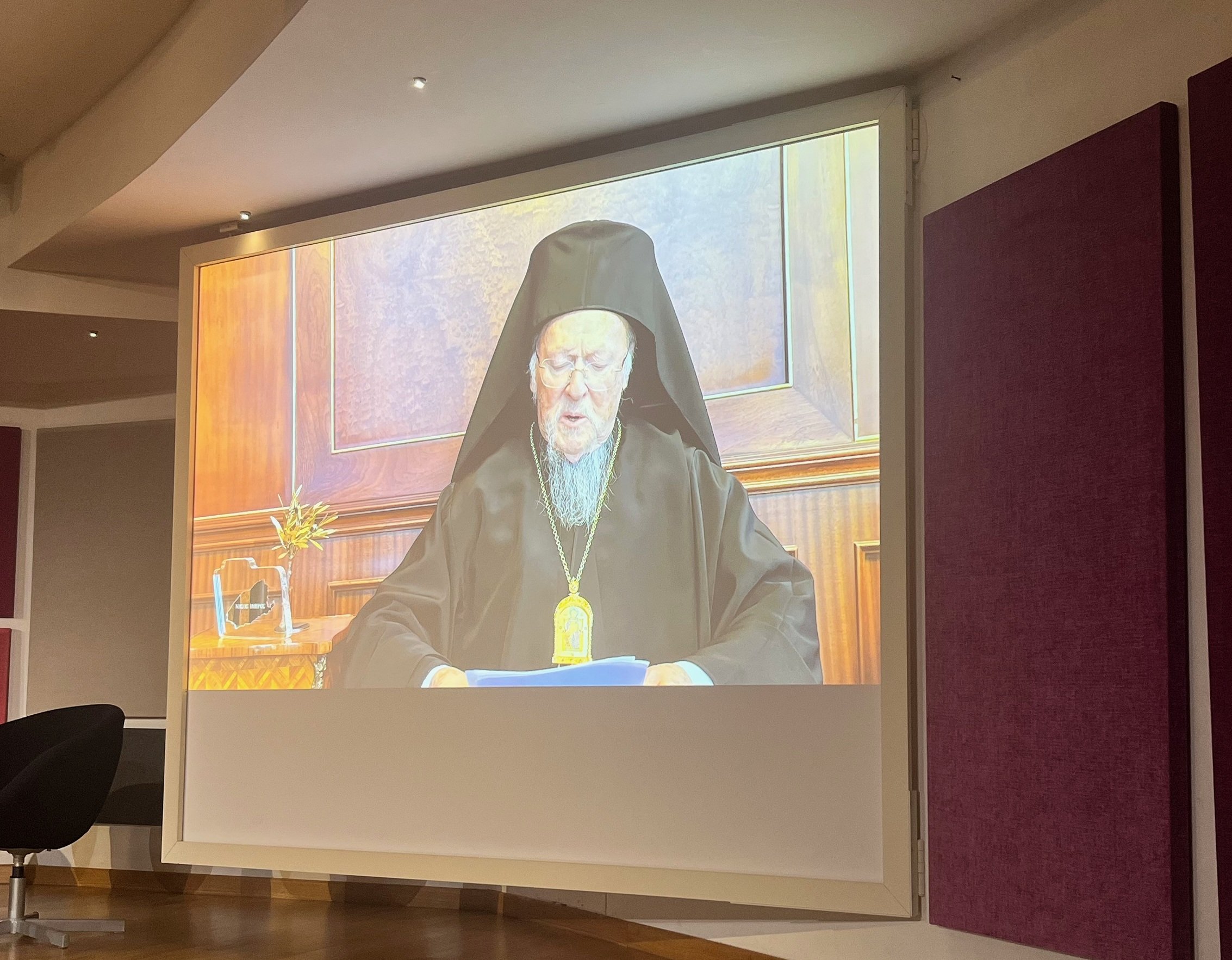
The Messages
Bartholomew I, in particular, recalled how the year was marked by ecumenical events, reflecting the «memory of the undivided Church of the first millennium,» such as the unified celebration of Easter on April 20th. After the death of Pope Francis the day after Easter, the new Pope, Leo XIV—again in the words of the Patriarch of Constantinople—continued the ecumenical commitment, particularly on the occasion of the 1700th anniversary of the Council of Nicaea. The culminating moment was the signing of a joint declaration with the Patriarch, which renewed «our common commitment to the dialogue of love and truth.» The 60th anniversary of the lifting of the 1965 excommunications was described by Bartholomew I as a «monumental act.»
Margaret Karram, president of the Focolare Movement, greeted the seminar participants, praising the initiative of the Ecumenical Chair at Sophia. Her message emphasized the rich legacy of «love and forgiveness» of that act, which opened a new chapter in relations between the Churches. Calling for preparation for the «miracle of unity,» as suggested by Patriarch Athenagoras I—«the union will happen. It will be a miracle. When? We don’t know. But we must prepare ourselves»—the Sophia University Institute serves as a tool for preparation for this epochal event. Although much remains to be done, Karram thanked God because «we are on the way,» invoking the Holy Spirit.
Pope Leo XIV made his presence felt in a message written by Cardinal Pietro Parolin, Secretary of State. On behalf of Leo XIV, he welcomed the conference, calling it «a historic gesture [that] opened a path of reconciliation.» It is recognized that ecumenical progress has purified «the memory of the events of 1054,» but the crucial question remains whether «the time has come to fully implement the ecclesiastical and canonical effects of the declaration.» To this end, he hopes to definitively eliminate terminology that is «no longer appropriate, such as “heretics” or “schismatics,”» and to mutually recognize the full ecclesial nature and validity of the sacraments. Participants were encouraged to suggest «new concrete steps that we can take together.»
A highly appreciated online address was delivered by the first president of the Sophia University Institute, the theologian Msgr. Piero Coda, who greeted the conference participants, highlighting the «significant harmony» between the commitment of the Ecumenical Chair and the recent meeting between Pope Leo and Patriarch Bartholomew, on the anniversary of the Council of Nicaea. The lifting of the 1965 excommunications was described as an expression of that mutual friendship (philia) already manifested in the embrace «almost in mutual “ecstasy”» between Paul VI and Athenagoras I in Jerusalem. This prophetic gesture indicates the «unique method» for unity, which is a movement of God himself who calls for our adherence so that we can «live again in full communion.» The goal is that, through unity, the world may know the Father’s love, as Jesus prayed.
La relazione introduttiva
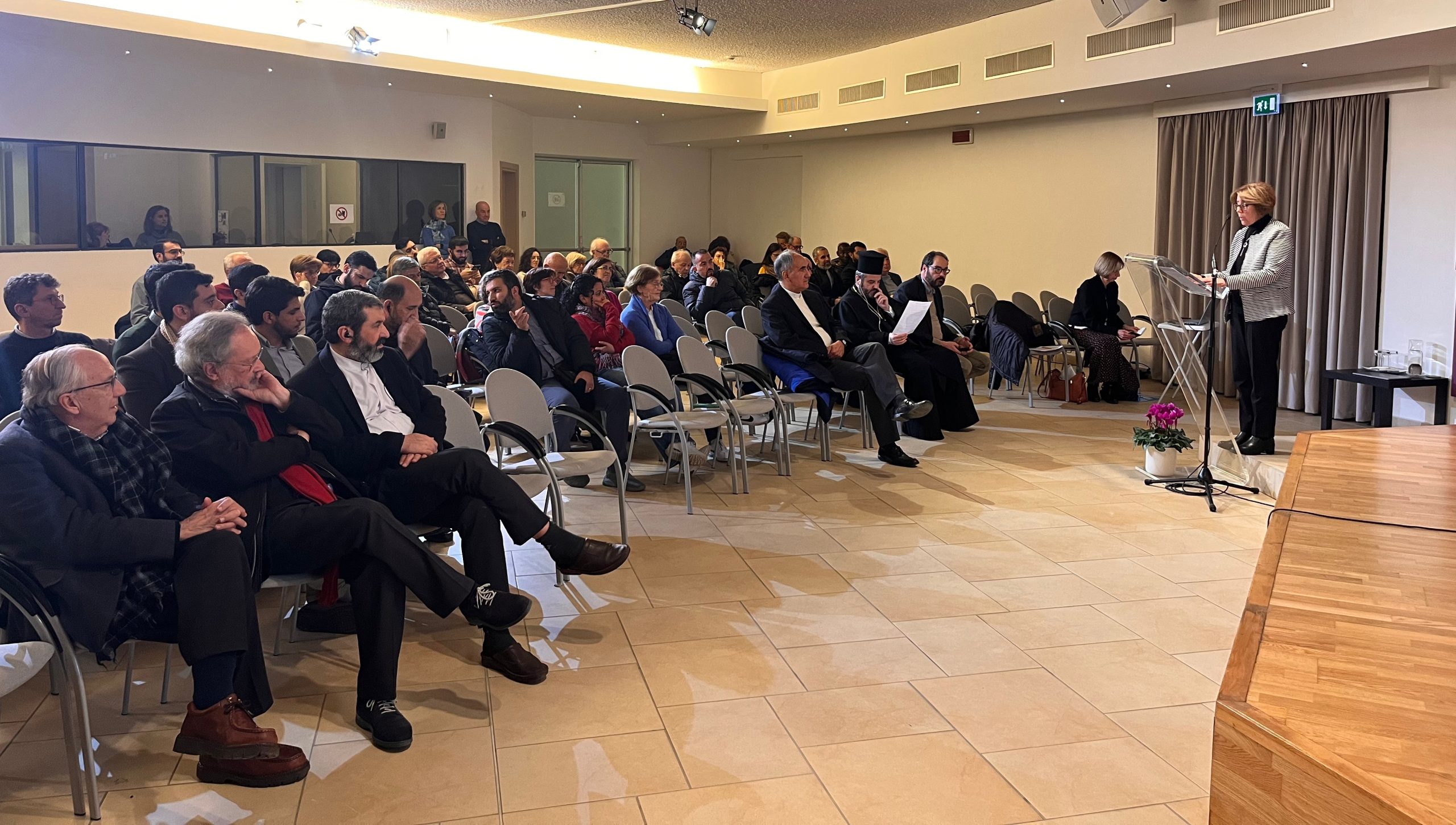
The introductory speech was given by Sandra Ferreira Ribeiro, co-responsible of the Focolare Movement’s Center for Ecumenical Dialogue. She presented the historical background that led to the lifting of the excommunications in 1965 and the meeting between Paul VI and Athenagoras. «The seminar commemorates the 60th anniversary of the lifting of the excommunications between Rome and Constantinople on 7 December 1965, an event of great historical, spiritual, and theological significance,» she said. The antecedents of this event date back to the mutual excommunications of July 1054 between Cardinal Umberto da Silva Candida and Patriarch Michael Cerulario. Although these excommunications lacked juridical effect, they fueled growing hostility, deepened by subsequent events such as the sacking of Constantinople in 1204 during the Fourth Crusade and the failed attempts at reconciliation during the Second Vatican Council. The turning point, the speaker recalled, came with the pontificate of Paul VI, who responded to Patriarch Athenagoras I’s dream of reconciliation. Their historic meeting in Jerusalem on 5 January 1964 was the first since the Council of Florence and symbolized a Copernican revolution in ecumenism: no longer a return of one Church to another, but of all to Christ. After this meeting, on 7 December 1965, the Pope and Patriarch simultaneously lifted the excommunications of 1054, a gesture that paved the way for future dialogue. Ten years later, in 1975, Paul VI’s humble gesture of kissing the feet of Patriarch Demetrius I’s delegation marked a further prophetic step. Today, the need for a shared «ecumenical spirituality» is emphasized, urging all the faithful, as expressed in the Joint Declaration signed by Pope Leo and Patriarch Bartholomew, to welcome the ecumenical fruits for their continued growth.

Metropolitan Maximos’s Address
Metropolitan Maximos began by examining the 2023 Alexandria Document, a document of Catholic-Orthodox dialogue, which focuses on the relationship between primacy and synodality in the second millennium, a central theme for the desired unity between the Churches. The document, predominantly historical in nature, seeks to interpret the history of the second millennium together for a «purification of memory» and reiterates that «a Eucharistic ecclesiology of communion is the key» to understanding both primacy and synodality. The text also insists that the two realities are «interrelated, complementary, and inseparable» and have never been abandoned by either side. It therefore rejects the pyramidal vision and the «concept of monarchical primacy,» as well as a «leveling synodism.»
The document emphasizes that the First Vatican Council’s teaching on the primacy of jurisdiction and papal infallibility «cannot be accepted by the Orthodox Church,» as it obscures the catholicity of the local Church. It notes, however, that synodality is not «merely consultative» for Roman Catholics, and primacy is not a «simple primacy of honor» for the Orthodox, although disagreements persist, for example, over the role of the pope in approving synodal decisions. In conclusion, Metropolitan Maximos stated that the lessons learned open «positive paths and perspectives for the future» toward a more authentic understanding of primacy and synodality within the context of the ecclesiology of communion.
Rector Declan O’Byrne’s Response
Reflections on the 1,700th anniversary of Nicaea pose the crucial question: if various Christians profess the Nicene-Constantinopolitan Creed together, why does Eucharistic division persist? The Creed, recognized as «the strongest ecumenical bond» and a «shared heritage,» is necessary but not sufficient for unity, which also requires «ecclesial virtues: charity, humility, patience.» A contemporary proposal suggests that, as in the formula of reunion of 433, shared Nicene faith is already the basis for Eucharistic communion, shifting the burden of proof onto those who place further barriers. The theologian Paul Gavrilyuk argues that subsequent differences (such as the filioque or Roman primacy) should be addressed within a restored communion, not as preconditions for achieving it. This does not imply minimalism, but a reordering of dialogue. The historical analogy of the 1965 lifting of excommunications between Pope Paul VI and Patriarch Athenagoras demonstrates that charity can remove canonical obstacles without waiting for perfect doctrinal agreement. Ultimately, unity is the fruit of discernment and «received» from the Spirit, and the task today is to ensure that institutional forms reflect the unity already given in Christ, responding to the gift with theological clarity and charity.
A Decisive Move towards Unity
The hundred participants—including a group of Shiite students, gathered at Sophia for an initiation course in Christian spirituality—appreciated «the clarity of their respective positions,» as emphasized by a Catholic priest, and the «decisive movement toward unity» that the Ecumenical Chair seeks to support.
Photos courtesy of Mariane Gonçalves de Araújo